Overview
H11 SCAFFX unifies two research architectures: a tri-grid scaffold that derives stiffness from triangular load paths and a telescopic Cylindrix standard that locks stability at defined height stages.
 H11 Systems
Tri-grid and telescopic scaffolding system
H11 SCAFFX™
SCAFFX combines direction-optimized triangular stiffness with positive stage locking to reduce sway, simplify height changes, and create reusable adaptive scaffold bays.
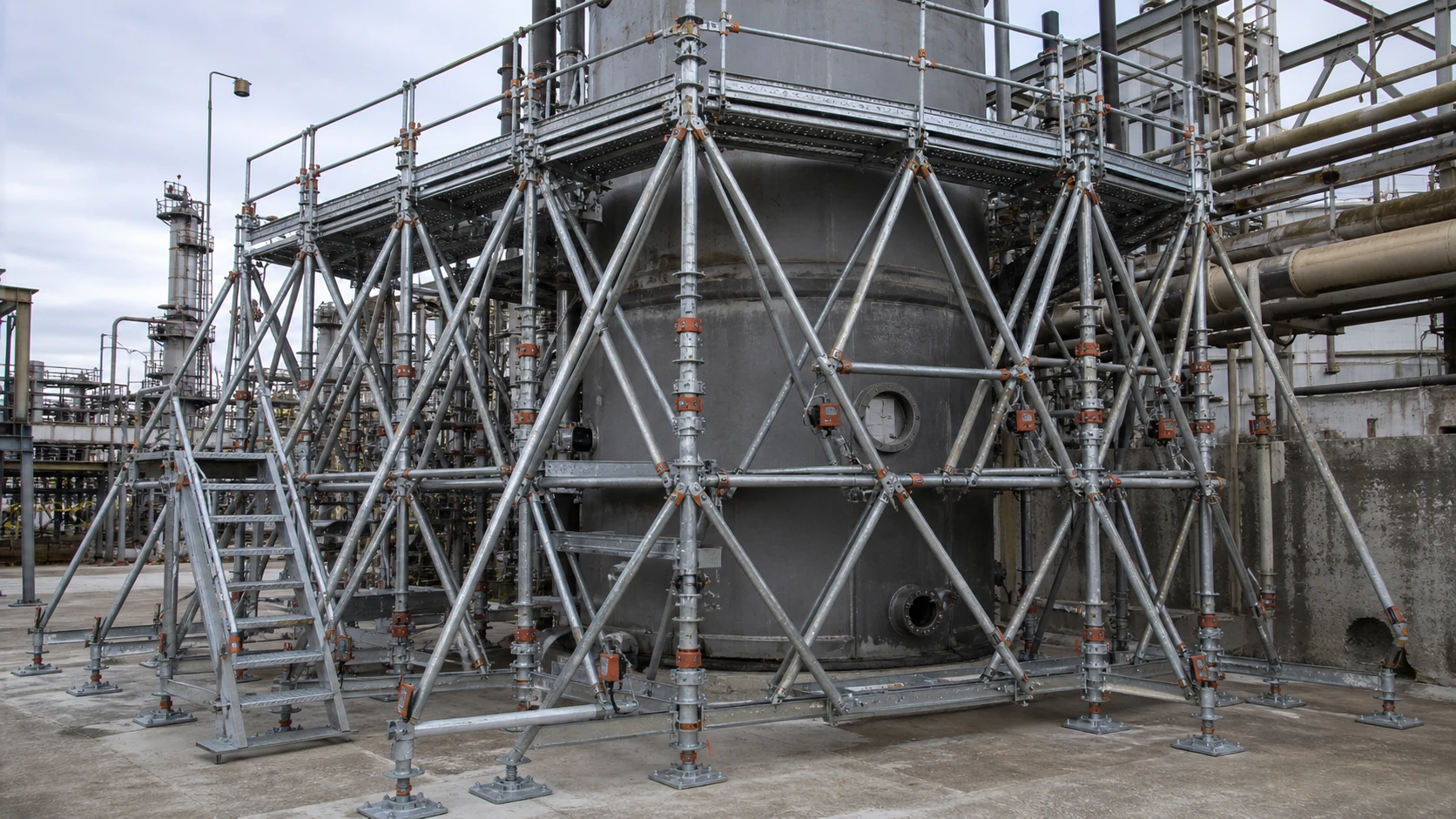
Geometry used as a primary stability mechanism
Height changes without full bay reconstruction
Designed around standard scaffold interfaces
System Overview
H11 SCAFFX unifies two research architectures: a tri-grid scaffold that derives stiffness from triangular load paths and a telescopic Cylindrix standard that locks stability at defined height stages.
It enables stable façade, refinery, shutdown, and confined-space access systems with fewer ad hoc braces, controlled height adjustment, and a consistent load path across changing bay geometries.
Three-direction locking nodes form triangular bays, concentric standards extend in fixed increments, positive rings block rotation and slip, and a load map guides bay configuration for wind, working load, and access requirements.
Capabilities
This public profile presents the system's capability direction while confidential operating logic and implementation architecture remain protected.
Triangular sway and torsion resistance
Stage-locked telescopic height adjustment
Compatibility with standard decks and guardrails
Direction-intelligent stiffness planning
Reduced dismantling during height changes
Modular deployment across industrial sites
Structural architecture
Tri-node connectors replacing square-frame dependence
Approximately 60-degree load-path geometry
Concentric telescopic standards with staged increments
Positive locks resisting rotation and slip
Configuration map for load, height, wind, and access
Applications